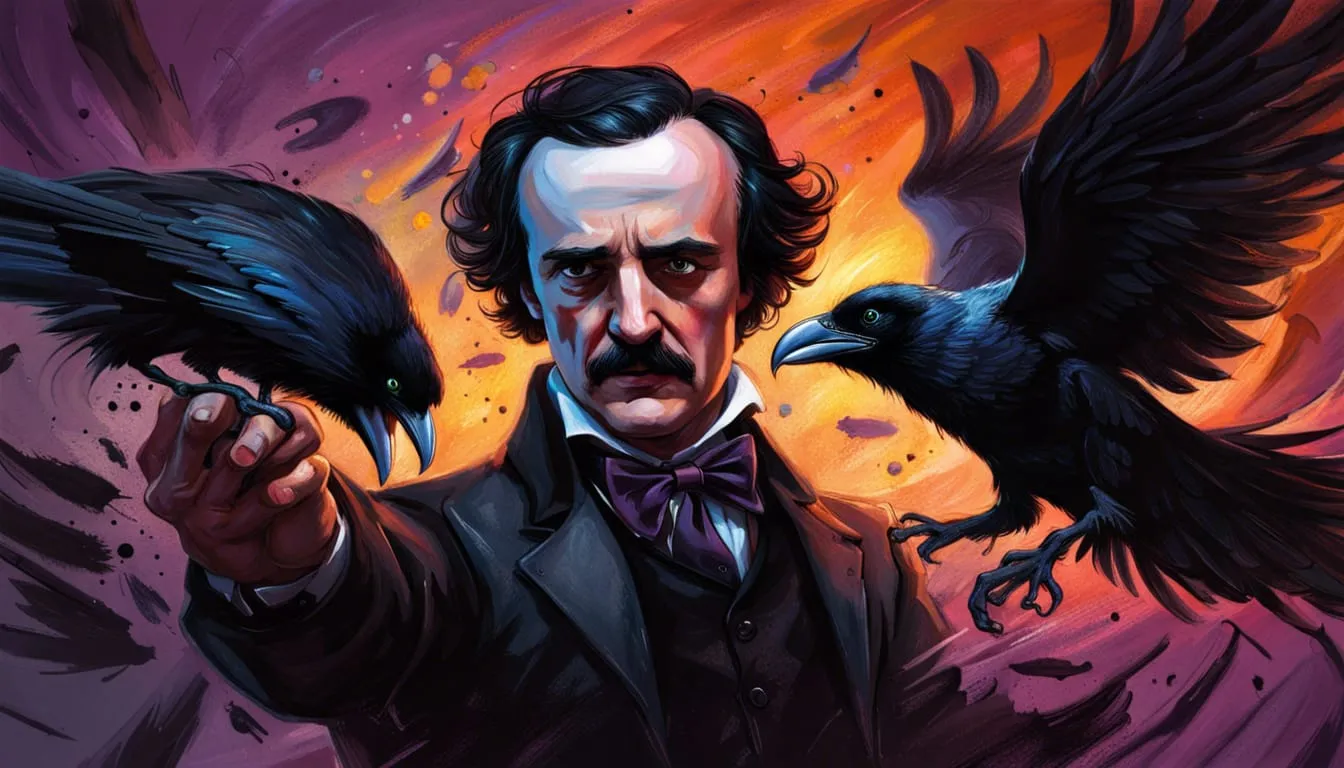
This research investigates the use of AI to generate visual representations of Edgar Allan Poe's literary works, aiming to enhance reader engagement by bridging traditional literature with modern digital media through AI-generated imagery, while identifying challenges related to visual consistency and narrative complexity.
This research explores the potential of artificial intelligence(AI) to create seamless and customizable visual representations of literary texts, specifically focusing on Edgar Allan Poe’s works. The aim is to bridge the gap between traditional literature and modern digital media by enhancing readers’ visualization of narratives through AI-generated imagery. This is particularly important in the digital age, where engagement with text is evolving due to shorter attention spans and the rise of multimedia content. The methodology involved data preprocessing, including text normalization, tokenization, and sentiment analysis, followed by genre classification using natural language processing(NLP) techniques and a Random Forest classifier. Advanced NLP and image generation models, GPT-3.5-Trubo and DALL-E were then used to create detailed and consistent visual representations of the text. The result demonstrated the models’ ability to generate images that aligned with the narrative and tone of the text, though challenges with consistency and handling complex narrative elements were identified. The study concludes that with further refinement, AI has the potential to transform the reading experience by offering new opportunities for engagement , accessibility, and innovation in the literary space. Future research will focus on experimenting with more advanced models, expanding the dataset, and exploring techniques for maintaining visual consistency across generated images.
Explore More!
Related Projects


© 2022 Inspirit AI. All Rights Reserved.