Back To Projects

Examination of Dragonflies (Pantala Flavescens): Characteristics, Identification and Migration Paths
Alya K.

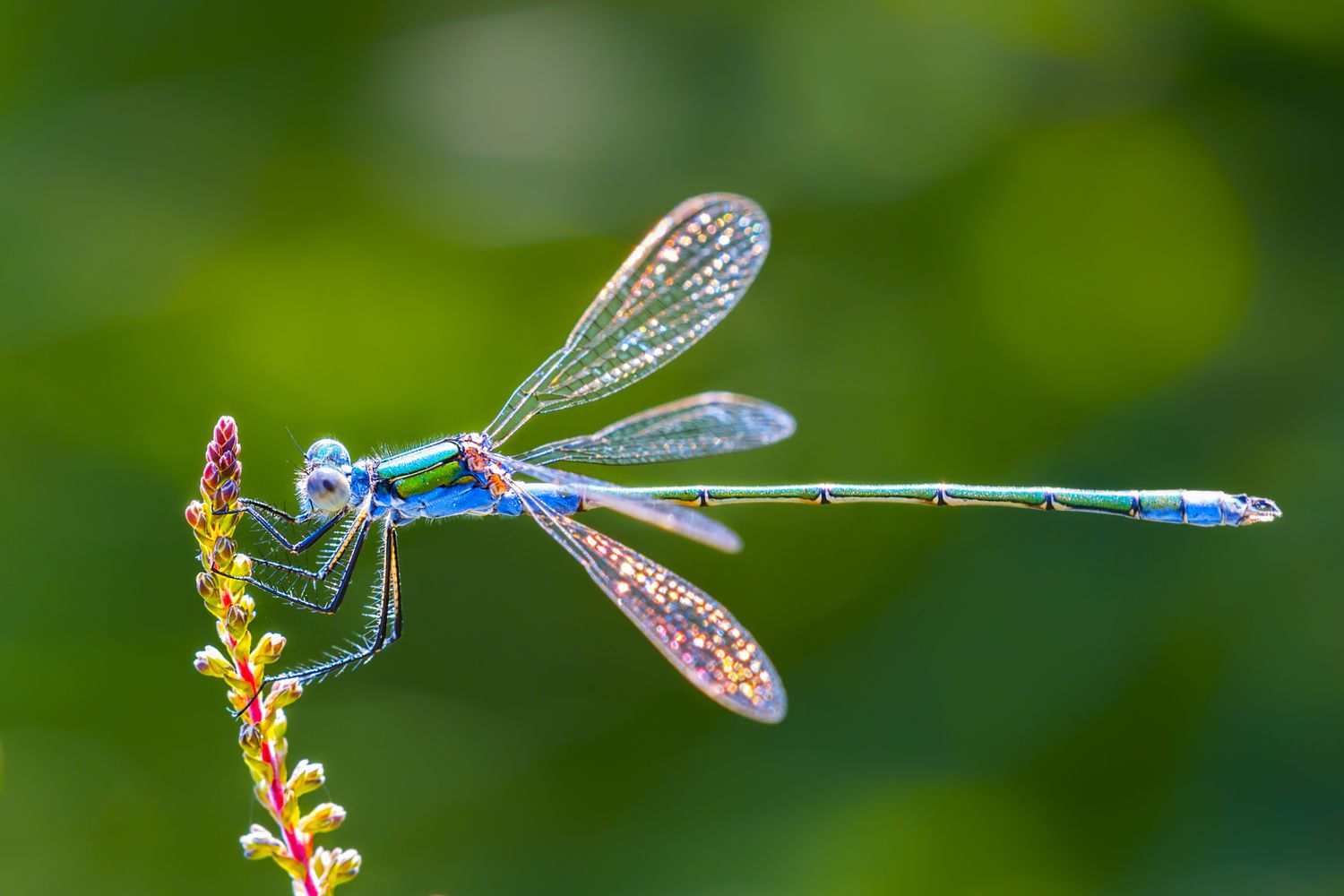
This study explores the Pantala flavescens species' anatomy and mechanisms for long-distance migrations.


The Pantala flavescens is a long range migratory dragonfly known for its widespread global population. Some recent research has suggested it can travel 4500 km in its lifetime, making it one of the farthest known migratory insects. This study explores the Pantala flavescens species' anatomy and mechanisms for long-distance migrations. Convolutional neural networks and transfer learning were used for image recognition of Pantala flavescens. Stable hydrogen isotope values are analyzed to locate the species' geographic origin. By gaining a better understanding of the Pantala flavescens’ definite migration routes, the study aims to minimize potential harm from climate change.

Explore More!

Alya K.
West Foster
PhD Candidate in Electrical Engineering at Stanford

Related Projects

SoilingNet: Convolutional Neural Networks for Analysis of Soiling Defects in Photovoltaic Panels

In our study, we present a two-step, fully supervised deep learning approach for analyzing solar panel soiling on a per-panel level.
Thomas G.
Mentored by
Plant Toxicity Classification by Image

Since differentiating between dangerous and safe plants is a complex task for a human brain, this study approaches the issue through machine learning models starting with a convolutional neural network (CNN) and discovering that a logistic regression model—trained on a dataset with manually designed features—has the best performance with the particular dataset used.
Eera B.
Mentored by Clayton Greenberg
Identifying Parameters in Water Potability Analysis Through Machine Learning

Predicting whether the water is potable or not can be helpful for people who are reliant on bodies of water and redirect them to safer options. It will also be beneficial to apply the algorithm to other places where it is expensive and inefficient to send people out and collect water samples. Over the past couple of decades, researchers have often commented on the lack of funding as a source of error when it comes to data analysis and the accuracy of the research.
Molly H.
Mentored by Sharon Chen