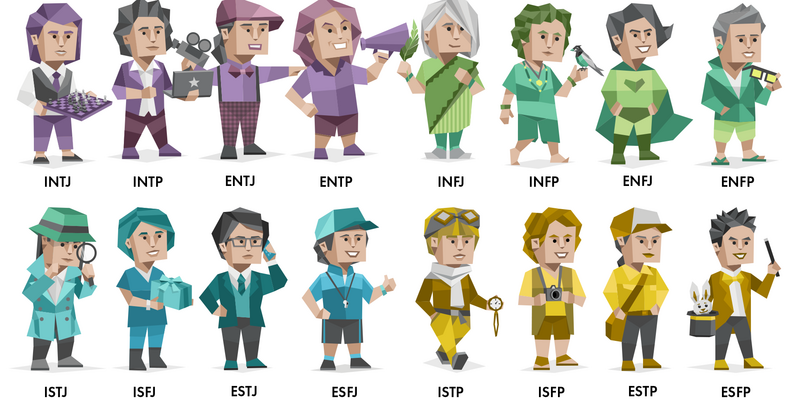
This project aims to lessen the reliance of self-report for personality typology through an artificial intelligence algorithm that can type people as one of the 16 MBTI types using an unedited writing sample by that person.
Personality typology, in this case MBTI, can give us great insight into how a person thinks and operates and what motivates that person’s decisions. Although typology is most commonly seen in pop psychology and used for fun, typing backed by more empirical evidence and less by self-reported answers, which rely solely on the self-awareness and unbiasedness of the person, could give a more accurate insight into how people fit into the theory of cognitive functions, which MBTI is based on. This project aims to lessen the reliance of self-report for personality typology through an artificial intelligence algorithm that can type people as one of the 16 MBTI types using an unedited writing sample by that person. The model used in this project is a transformer model, and the dataset used is a Kaggle dataset consisting of 8000 people’s personality types and 50 written samples from each person. The results are presented through a Streamlit app that uses the model to assign a personality type according to inputted text. The accuracy measured while testing this model is approximately 57.64%, which means the model correctly classified over half the text samples it was tested on. This indicates that there is a pattern that the model is picking up on, other than complete chance, that connects a person’s writing to their MBTI type. However, the writing is not 100% predictive of the person’s personality type.
Explore More!
Related Projects


© 2022 Inspirit AI. All Rights Reserved.