
Diagnosing Brain Tumors from MRI Images Using Deep Transfer Learning
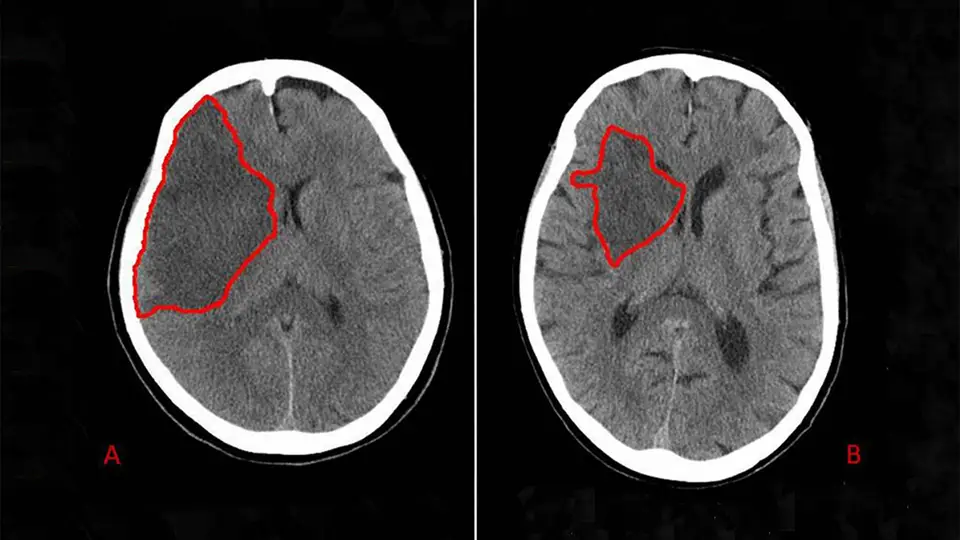
This study aims to utilize a transfer learning method in which the prior knowledge of a pretrained model is used to aid in a new classification problem.
Each year, more than 100,000 people in the United States are diagnosed with a brain tumor. An early and accurate diagnosis is crucial in getting patients the necessary treatment and increasing survival rates. In recent years, machine learning algorithms have become increasingly popular in the medical field due to their ability to recognize complex patterns and reduce human errors. However, accurate diagnosis using deep learning algorithms requires a large amount of training data, which is not always available. Additionally, training a model from scratch can take a long time and requires vast amounts of computational power. As a solution, this study aims to utilize a transfer learning method in which the prior knowledge of a pretrained model is used to aid in a new classification problem. In this study, a dataset of MRI images consisting of four classes (no tumor, pituitary tumor, meningioma, and glioma) were used. The performance of seven pretrained models (ResNet18, ResNet50, VGG16, DenseNet, GoogLeNet, ShuffleNet, and MobileNet) were evaluated in order to see which would achieve the highest classification accuracy. Additionally, this study examined two different methods for the implementation of transfer learning. In the first method, all layers of the pretrained model were frozen and in the second method, all layers of the pretrained model were trained. The best performing models proved to be ResNet18 and ShuffleNet with all layers trained, achieving an accuracy of 97.86%. The results also showed that the unfrozen models outperformed their frozen counterparts.
Explore More!

Related Projects
© 2022 Inspirit AI. All Rights Reserved.