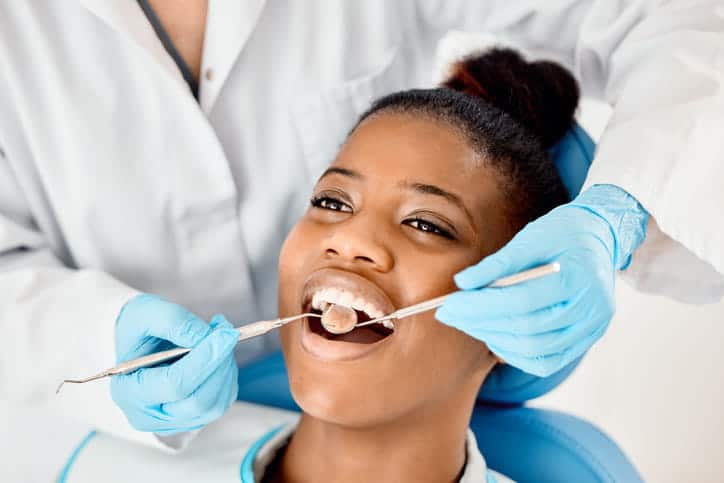
Dental segmentation can help with decision-support issues in medical diagnosis, such as human identification and maxillofacial surgery, as well as orthodontic therapy, implant planning, and other issues. This leads to my research question; “How do I automate the task required to diagnose a dental problem during a dental visit?”
Dental segmentation can help with decision-support issues in medical diagnosis, such as human identification and maxillofacial surgery, as well as orthodontic therapy, implant planning, and other issues. This leads to my research question; “How do I automate the task required to diagnose a dental problem during a dental visit?” The approach to solve this was to train an AI with images pre-segmented by experts and then test it. This process is also called image segmentation. The AI had eventually gotten a test accuracy score of 0.940 and test IoU score of 0.904. The closer to one that these scores are the better. Pixel accuracy and Iou score were surprisingly similar. I think that this is a good thing because it means both seem pretty accurate. The AI has its flaws but it can segment images when given images
Explore More!
Related Projects

© 2022 Inspirit AI. All Rights Reserved.