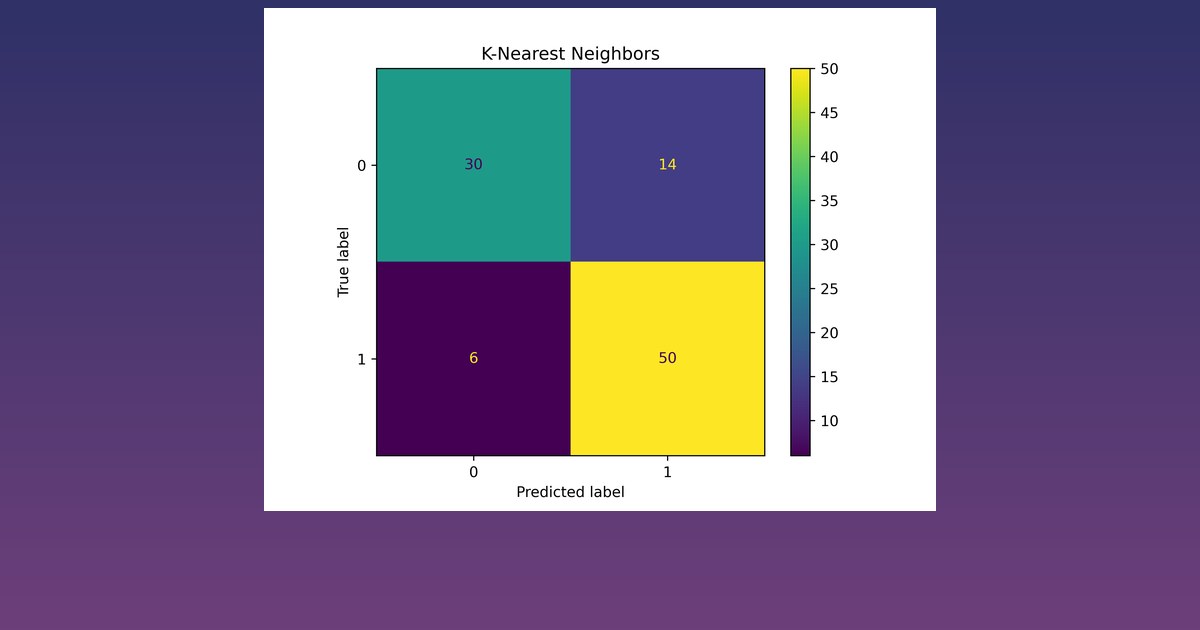
This paper addresses the critical question of how various medical factors influence vulnerability to stroke in patients, aiming to develop an effective machine-learning model for stroke detection.
This paper addresses the critical question of how various medical factors influence vulnerability to stroke in patients, aiming to develop an effective machine-learning model for stroke detection. Stroke remains a pervasive health concern, with one in six deaths from cardiovascular disease attributed to it in 2021. Every 40 seconds in the United States, an individual experiences a stroke, emphasizing the urgent need for accurate prediction methods. Our study leveraged diverse machine learning models, necessitating dataset balancing prior to model evaluation. Subsequently, a comparison of metrics and fine-tuning of hyperparameters culminated in the selection of the K-Nearest Neighbors (KNN) as the optimal model. The KNN exhibited notable performance metrics, achieving an accuracy score of 80%, a recall score of 89.2%, an F1 score of 83.3%, and a precision score of 78.1%. These metrics signify the model's proficiency in correctly identifying stroke cases, its sensitivity to true positives, and its balance between precision and recall. This study underscores the potential of advanced machine learning models, particularly the KNN, in stroke detection, suggesting its viability for integration into medical consultations. However, the gravity of stroke as a life-threatening condition necessitates rigorous testing on larger and more recent datasets to ensure robustness and reliability in clinical applications. It should also be noted that changing the BMI, average glucose level, and age of the patient affected model performance the most.
Explore More!
Related Projects

© 2022 Inspirit AI. All Rights Reserved.