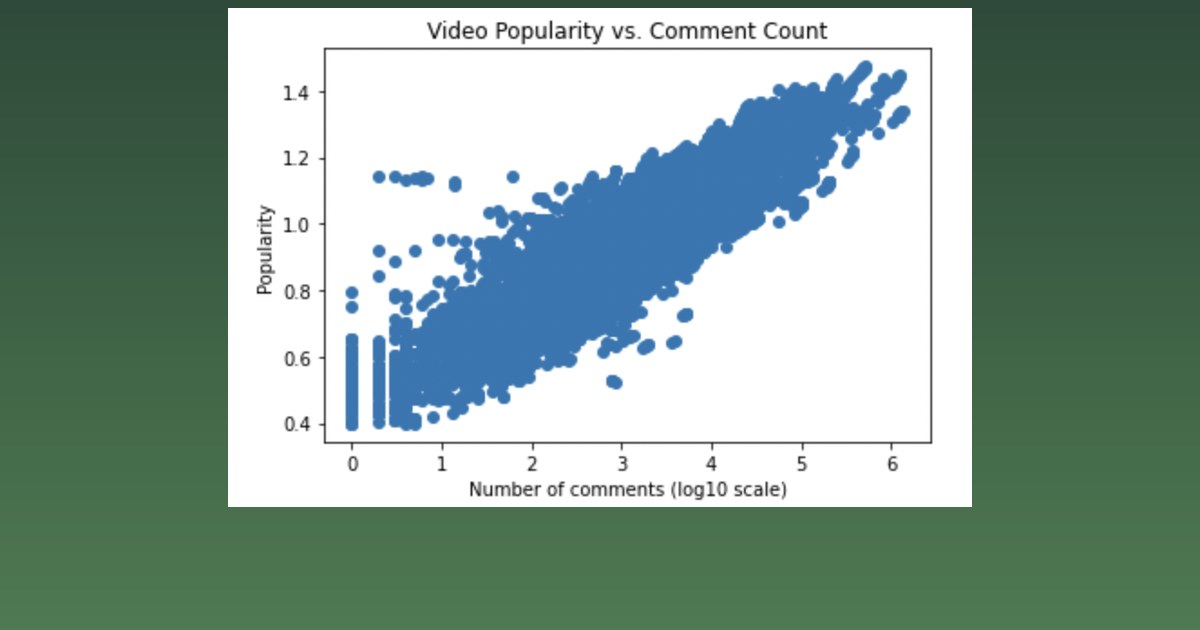
As the digital world continues to grow, content creators frequently have trouble building a community and producing videos that will interest their audience. Especially as these people look toward the internet for both recreational and monetary reasons, finding out techniques to build a community is important in today’s age. This paper analyzes the issues of video performance, revealing the patterns of what makes a video successful and viral. By training different models and testing different datasets, we were able to find the correlation between the potential chances of popularity and the video’s content. Using the most accurate model, the Random Forest model, content creators can see whether or not they are likely to do well based on patterns found in trending videos.
As the digital world continues to grow, content creators frequently have trouble building a community and producing videos that will interest their audience. Especially as these people look toward the internet for both recreational and monetary reasons, finding out techniques to build a community is important in today’s age. This paper analyzes the issues of video performance, revealing the patterns of what makes a video successful and viral. By training different models and testing different datasets, we were able to find the correlation between the potential chances of popularity and the video’s content. Using the most accurate model, the Random Forest model, content creators can see whether or not they are likely to do well based on patterns found in trending videos.
Explore More!
Related Projects


© 2022 Inspirit AI. All Rights Reserved.