
Back To Projects

Comparison of Machine Learning Models to Best Predict Game Attendance in Major League Baseball

Seohyun P.

To forecast Major League Baseball game attendance, this study employs six different regression models commonly used for machine learning.


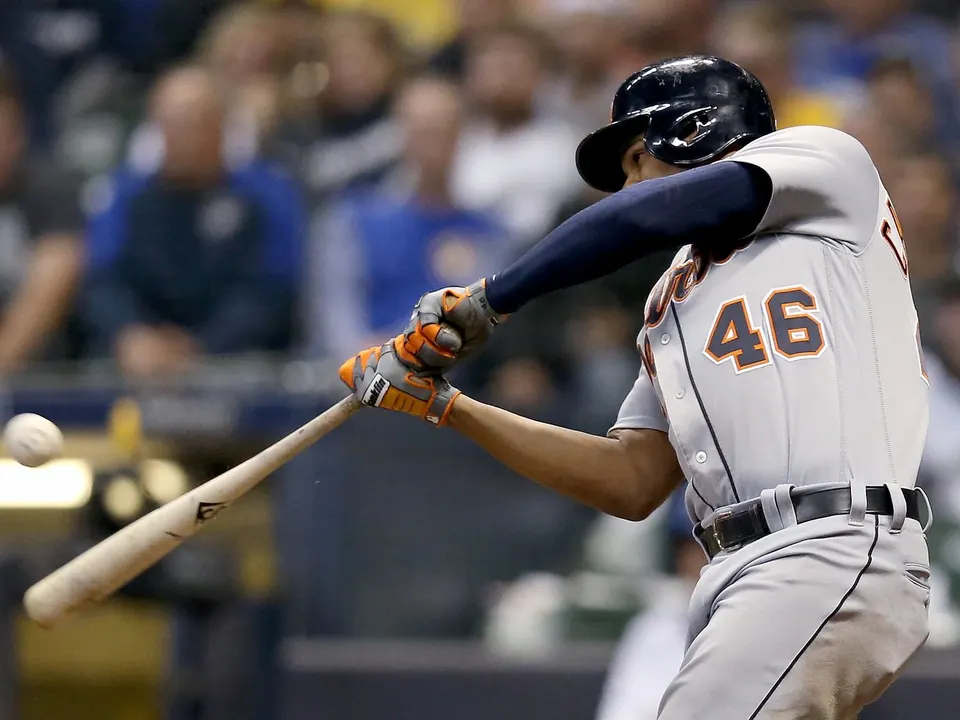
To forecast Major League Baseball game attendance, this study employs six different regression models commonly used for machine learning. The models include Multiple Linear Regression, Decision Tree, Random Forest, Support Vector Regression, Multi-Layer Perceptron Regression, and Gradient Boosting. For the dataset, the 2022 and 2023 games of the Los Angeles Dodgers are used to reflect the recent trend of fan attendance and focus on a single random team so that different tendencies of each team’s fans do not become a confounding variable. Each regression model’s performance is evaluated by Mean Absolute Percentage Error and Root Mean Square Error. The performance evaluation suggests that Random Forest and Gradient Boosting predict attendance with the highest accuracy. Using these prediction models, each baseball team may facilitate staff management, event organization, and marketing before their games.

Explore More!

Seohyun P.
Kasra Koushan
MSE in CS from Penn

Related Projects

Allez Go: AI Fencing Referee

Technology in fencing is generally an underdeveloped field and automated referees present potentially significant benefits to the sport. Automated referees will offer a more consistent call compared to a group of human referees with slightly different interpretations of the fencing rules.
Jason M.
Mentored by Anna Orosz
Application of AI to Tennis Match Footage Transcription

One of the best ways for tennis players to improve their game is to record and watch their own match footage, find patterns in the points they win and lose, and practice based on these realizations. However, watching match footage and documenting each point shot by shot is a very time-consuming process. This paper investigates an AI approach to transcribing tennis match footage, combining a deep convolution neural network (YOLOv4), a pose estimation model (Movenet), and a long short- term memory (LSTM) deep neural network. Looking at a transcript of each point will be far more efficient than watching entire match footage for a player to understand how they are losing and winning and analyze patterns in their game. The LSTM model in this project achieved accura- cies of 73.33% and 79.31% when classifying shot type (forehand, forehand volley, forehand slice, backhand, backhand volley, backhand slice, over- head/smash, and serve) for players on the close side and opposite side of the net, respectively, and 55.17% and 60.00% when classifying the di- rection of a shot (cross-court, down the line, down the middle, inside in, inside out, out wide, down the t, and body) for players on the close side and opposite side of the net, respectively.
Marco Y.
Mentored by Eric Bradford
workspace_premium
Optimizing Prediction Accuracy Using Advanced Ensemble And Voting Classifier Methods

This project observes how various machine learning models, once tuned, can further be combined to create a complex model that uses NFL data from the past 18 years to predict the outcomes of matchups between any two competing teams.
Ashray P.
Mentored by Christopher Mauck