
Multi-Label Prediction of Protein Subcellular Localizations through Machine Learning and State-of-the-art Structural Embeddings
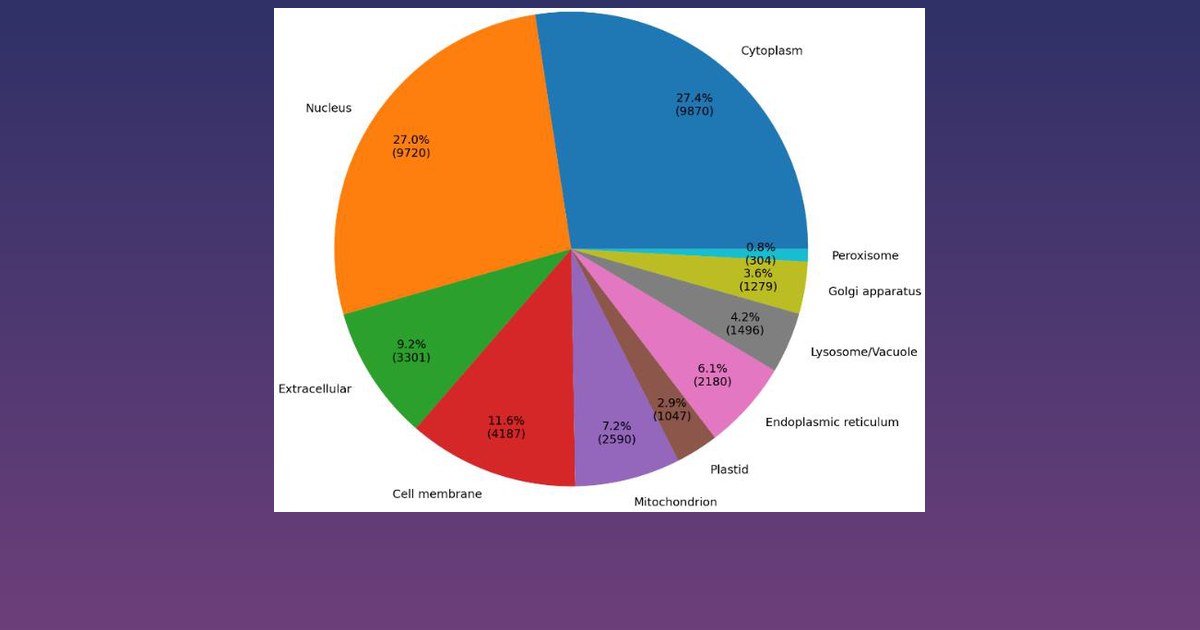
This research explores various machine learning models to predict protein subcellular localization using UniProt’s Swiss-Prot database and Meta’s high-performing ESM2 structural embeddings.
A polypeptide, more commonly referred to as a protein, is a macromolecule consisting of linear sequences of organic compounds called amino acids joined together by covalent bonds. Proteins carry different functions in living organisms, which are often associated with their location inside eukaryotic cells. Experimental approaches for localizing proteins such as green fluorescent protein and microscopic detection are costly and time-consuming. Thus, computational methods have been adopted to facilitate this process by generating accurate predictions. This research explores various machine learning models to predict protein subcellular localization using UniProt’s Swiss-Prot database and Meta’s high-performing ESM2 structural embeddings. We extracted our dataset’s protein embeddings from ESM2’s model code publicly posted on GitHub. Multiclassification Scikit-learn models were trained and tested to achieve optimal predictions. Our best-performing model, a weighted 4-Nearest Neighbors Classifier, yielded a 57% accuracy and a MacroF1 score of 66%. Our classifier outperformed past state-of-the-art algorithms (such as Deeploc2.0) on several but not all metrics. The results obtained demonstrate the potential of machine learning in producing unprecedented advancements in the proteomics field.
Explore More!
Related Projects

© 2022 Inspirit AI. All Rights Reserved.