Back To Projects

Application of Machine Learning to Distinguish Premature Leukemia Cells from Healthy Blood Cells


Noor E.

Convolutional Neural Networks (CNNS) to solve this problem have been created with classification validation accuracy rates as high as 96.15%.


Leukemia is a disease that primarily impacts children. The likelihood of beating this deadly disease increases with early detection. Because premature Leukemia blasts are unidentifiable by the human eye, different methods are needed to accurately diagnose cancer in its early stages. Convolutional Neural Networks (CNNS) to solve this problem have been created with classification validation accuracy rates as high as 96.15%. A dataset from the Cancer Imaging Archive [1] was used to train a CNN model. Of the 15,135 images in the dataset, 600 were used to prevent system crashing. With the limited resources available, a 63.6% validation accuracy was achieved.

Explore More!

Noor E.
Yiran Li
Biometry and Stats Cornell Alum, Bioinformatics MS at ETH Zürich

Related Projects

Predicting Dementia Risk with Machine Learning

This research addresses the urgent need for early dementia detection by using machine learning to analyze patient health factors, such as heart rate and diabetes, for dementia prediction, achieving a 52% accuracy with a random forest model and paving the way for future model improvements and deeper insights into influential risk factors.
Min W.
Mentored by John Basbagill
Utilizing AI for Alzheimer's Diagnosis

This research assesses the potential of AI to improve early Alzheimer’s diagnosis by evaluating various classifier models, with results showing that while MLP classifier achieved only 32% accuracy, the Random Forest classifier excelled at 91.5%, highlighting the importance of factors like the mini mental state evaluation over others, as revealed in the Logistic Regression Feature Importance analysis.
Trinity M.
Mentored by Kevin Phan
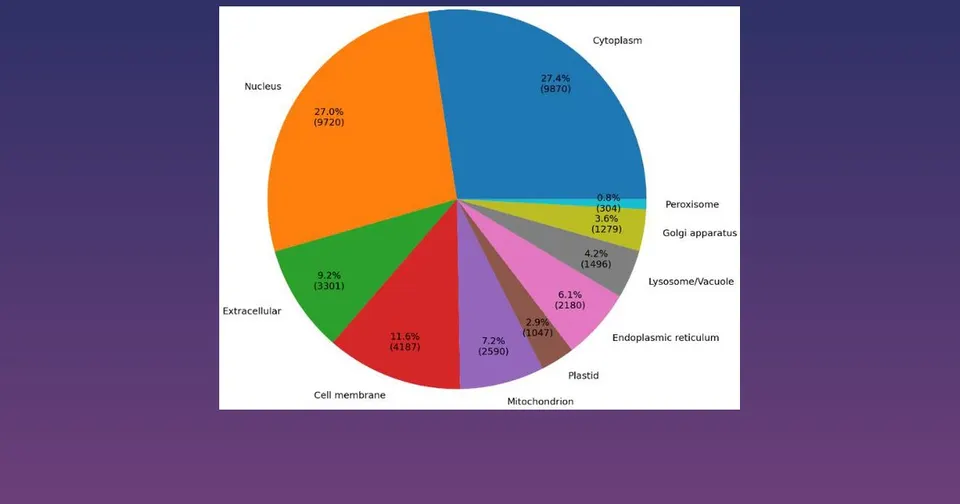
Multi-Label Prediction of Protein Subcellular Localizations through Machine Learning and State-of-the-art Structural Embeddings

This research explores various machine learning models to predict protein subcellular localization using UniProt’s Swiss-Prot database and Meta’s high-performing ESM2 structural embeddings.
Alfred B.
Mentored by Ayush Pandit