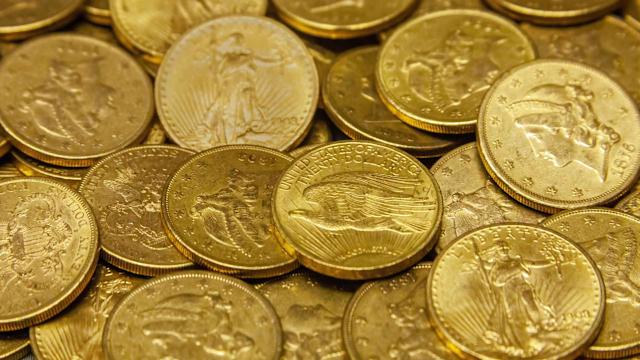
The grading process, though, is time and resource-intensive, making it far too expensive for a casual coin collector to get a coin graded. To democratize this process, we developed a computer vision model that grades coins based on an image alone, which makes grading a coin essentially free of cost and provides a dramatic reduction in time.
Rare coins differ greatly in value based on their quality, leading to the development of a standardized 1-70 scale on which coins are graded. The grading process, though, is time and resource-intensive, making it far too expensive for a casual coin collector to get a coin graded. To democratize this process, we developed a computer vision model that grades coins based on an image alone, which makes grading a coin essentially free of cost and provides a dramatic reduction in time. Our dataset consisted of labeled image data from Professional Coin Grading Services, on which we applied affine geometric data augmentations to mitigate possible domain shift on new, “imperfect” images. We experimented with training several different convolutional neural network architectures on this data. Furthermore, we utilized several metrics to effectively evaluate and compare different coin grading models. Our final accuracy was over 50%, and 77% of the predictions were within one grade of the correct grade, affirming that a model sufficiently performant for consumer use is possible. Future work could involve crowdsourcing natural datasets of coin images and making a web or mobile application interface to make our model available to the public.
Explore More!
Related Projects

© 2022 Inspirit AI. All Rights Reserved.