
Predictive Dynamics of Solar Cycles: An Analysis of Sunspot Patterns, Granger Causal Relationships, and Terrestrial and Space Weather Phenomena
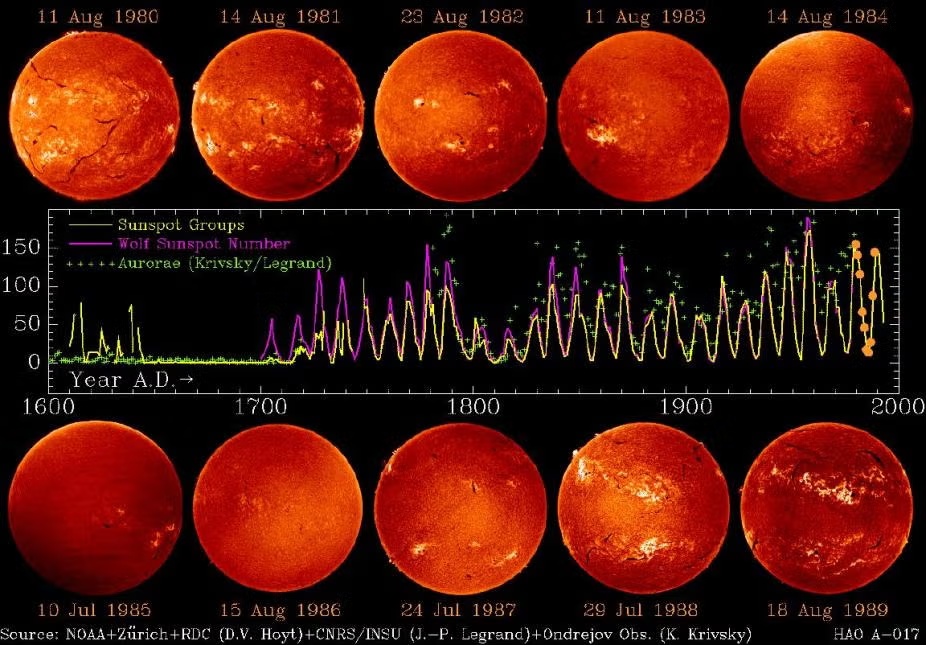
This paper attempts to understand the complex nature of solar cycles, primarily through the lens of sunspot data analysis, to predict future solar activity and explore its causality with Earth and Space phenomena such as global temperatures and CO2 Emissions.
This paper attempts to understand the complex nature of solar cycles, primarily through the lens of sunspot data analysis, to predict future solar activity and explore its causality with Earth and Space phenomena such as global temperatures and CO2 Emissions. Using statistical time series analysis methods, including Seasonal AutoRegressive Integrated Moving Average (SARIMA) and Long Short-Term Memory (LSTM) networks, predictive models were developed based on historical sunspot records dating back to 1818 up to 2019. The aim was to create a forecast mechanism to indicate and predict future solar cycle patterns. Granger causality tests were used to investigate the influences of sunspot activity on other variables of interest, such as CO2 emissions and climate temperature variations. The findings of this analysis contribute to the growing research in astrophysics and environmental science to offer insights that could be beneficial for future research into solar phenomena and its effects on Earth.
Explore More!
Related Projects

© 2022 Inspirit AI. All Rights Reserved.