
Differences in predicted rates of vaginal births after cesarean across racial groups in a ‘race-neutral’ model
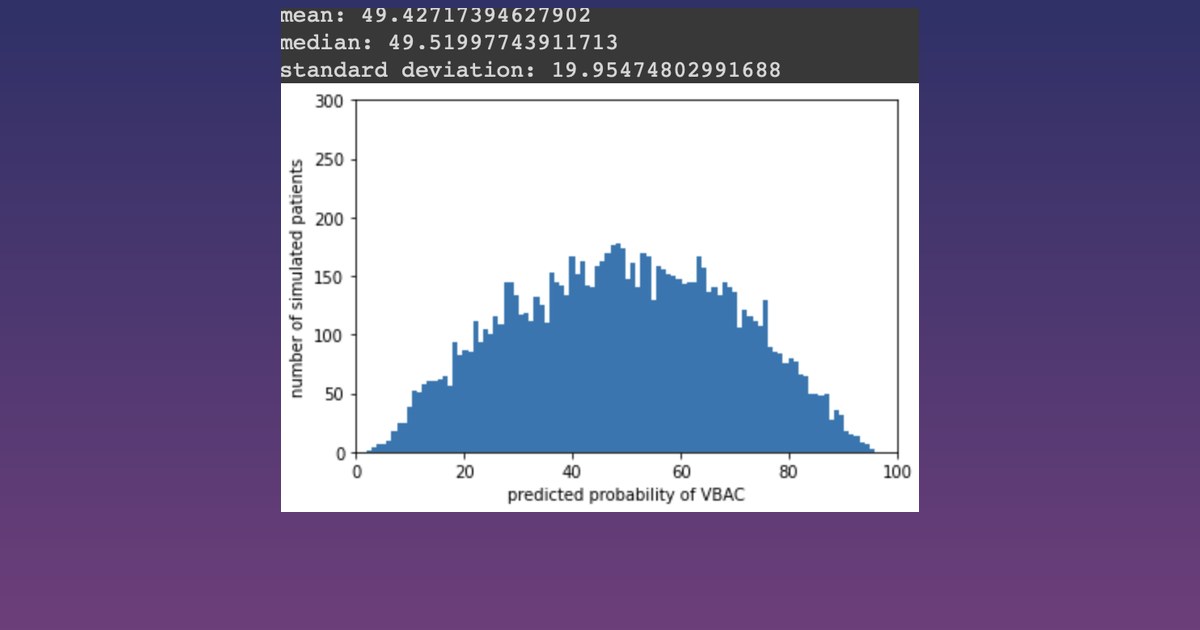
A large body of work in machine learning has highlighted that supposedly de-biased systems often re-code sensitive variables like race in terms of proxy variables. In order to determine if this was the case in this calculator, we replicated their formula, then found base-rate statistics of all the input variables for three different racial groups: Black, White, and Asian.
When physicians and pregnant patients make decisions about whether to pursue a vaginal birth or cesarean, there are many factors at play. While vaginal birth can have health benefits for both parent and child, there are significant safety risks. In order to minimize these risks, physicians use predictive models to determine how likely patients are to have successful vaginal births after cesareans (VBAC). For many years, these predictive models included race as a variable. This decision recently came under fire, and the Maternal Fetal Medicine Unit (MFMU) published a calculator that did not include race as a variable, but still predicted VBAC success with high accuracy. A large body of work in machine learning has highlighted that supposedly de-biased systems often re-code sensitive variables like race in terms of proxy variables. In order to determine if this was the case in this calculator, we replicated their formula, then found base-rate statistics of all the input variables for three different racial groups: Black, White, and Asian. We found that the distribution of VBAC probabilities for our simulated patients from these three groups were, indeed, significantly different from each other. Further, the predicted VBAC rates increased as a function of societal marginalization: Black patients were 47.6% likely to have a successful VBAC, Asian patients had a 48.6% probability, and White patients had a 49.4% probability. While these values are all within a few percentage points of each other, the differences in these simulated distributions shows how there may still be underlying disparities in the maternal healthcare system.
Explore More!

Related Projects

© 2022 Inspirit AI. All Rights Reserved.