
What Factors Correlate with the Relationship Between Gender and Race and Pursuing STEM?
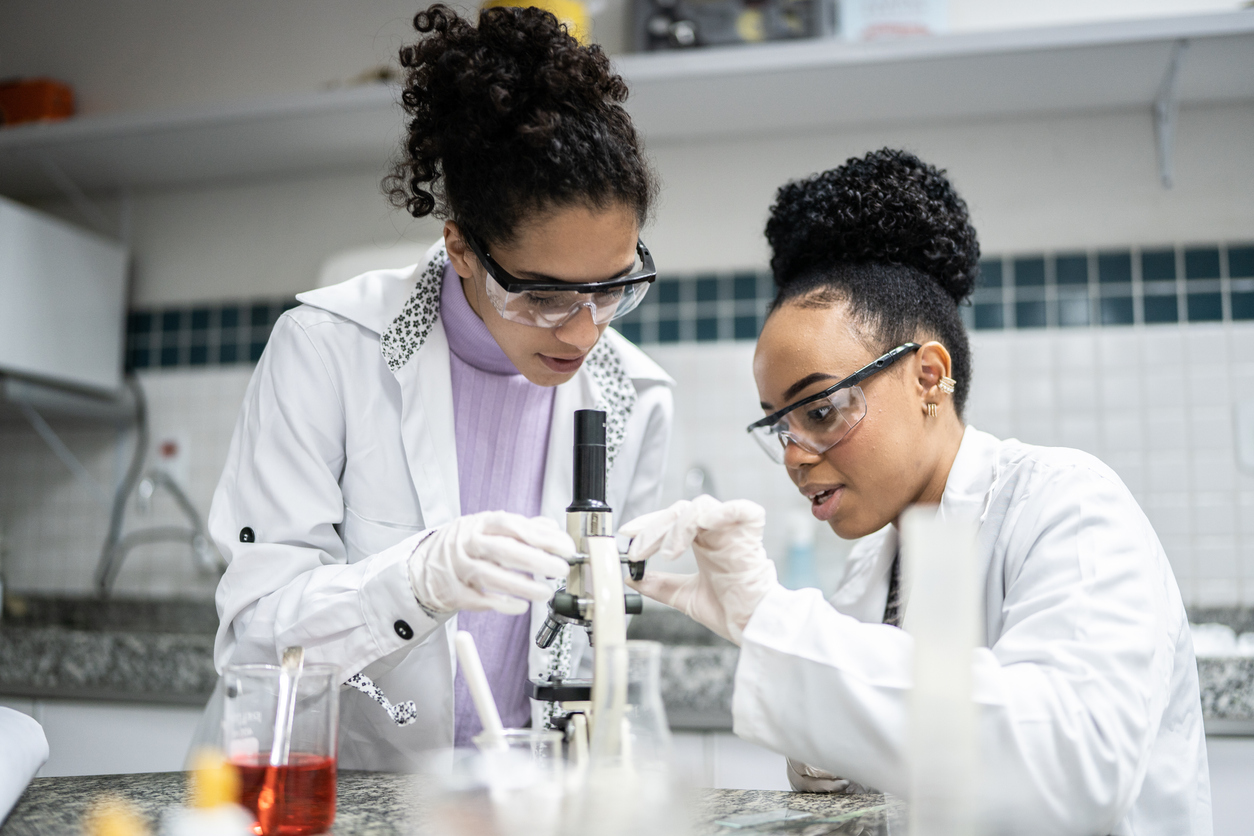
In this paper, I sought to answer the question, “How do races and genders differ in the way they pursue STEM, and what factors correlate with these differences?” Identifying which factors cause this lack of representation is the most important step in fixing the diversity problem.
The world of technology and Science, Technology, Engineering, and Math (STEM) is dominated by Caucasians, Asians, and males. According to Computer Science.org, while African Americans and Latinos make up 13.4% and 16% of the US population respectively, they only comprise 9% and 7% of STEM occupations (McGee). In this paper, I sought to answer the question, “How do races and genders differ in the way they pursue STEM, and what factors correlate with these differences?” Identifying which factors cause this lack of representation is the most important step in fixing the diversity problem. To answer this question, I used data from the High School Longitudinal Study (HSLS), which asked hundreds of questions at different points throughout students’ high school and college careers. I used 16 of these questions and analyzed how strongly they correlate with pursuing a STEM career or not pursuing a STEM career. I found that Asians are much more likely to pursue STEM, African Americans are much less likely to pursue STEM, and women are much more likely to pursue STEM, although they largely pursued health occupations within STEM. It is important that we make sure everyone feels comfortable pursuing or not pursuing STEM. From my literature review, I found that Asians are more likely to and African Americans are less likely to pursue STEM because Asians feel like they fit in and African Americans feel like they don’t (Milgrom-Elcott). In order to increase the diversity in the STEM workforce, we need to make sure all minority groups feel welcomed in high school STEM classes, college STEM courses, and STEM workplaces themselves.
Explore More!
Related Projects

© 2022 Inspirit AI. All Rights Reserved.