Back To Projects

Relationship of Factors that Determine Tweet Virality

Shawn Z.

This paper addresses a growing dilemma: As Twitter becomes ever more influential in the modern landscape, predicting what will go viral can help in the discovery and pushing of new ideas and mitigation of risks associated with online networking.


How can Artificial Intelligence predict the popularity of posts on Twitter (X)? Twitter’s development in mainstream media has been profound, and as the platform increases more overtime, so does the need for predicting virality of tweets on the platform for opinionation. This paper addresses a growing dilemma: As Twitter becomes ever more influential in the modern landscape, predicting what will go viral can help in the discovery and pushing of new ideas and mitigation of risks associated with online networking. We provide an extensive analysis over a dataset consisting of user data and tweet data to compute a virality rating. Using a learning model, we managed to achieve a maximum of 67.32% accuracy on predicting virality based on all user data based on a 1-5 scale ranking.

Explore More!

Shawn Z.
Shreyas Ramesh
MS in Robotics at UPenn

Related Projects

T-RECSYS+: An Improved Music Recommendation System

In our research, we build a music recommendation system to make prediction of users' listening preference.
Zhou C.
Mentored by Ross Greer
Analysis of Trending YouTube Videos: Finding Patterns in Viral Content

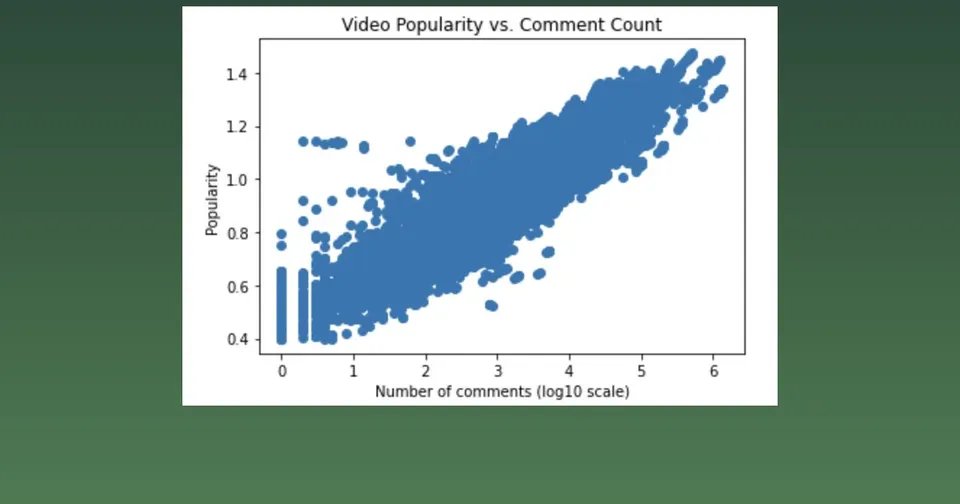
As the digital world continues to grow, content creators frequently have trouble building a community and producing videos that will interest their audience. Especially as these people look toward the internet for both recreational and monetary reasons, finding out techniques to build a community is important in today’s age. This paper analyzes the issues of video performance, revealing the patterns of what makes a video successful and viral. By training different models and testing different datasets, we were able to find the correlation between the potential chances of popularity and the video’s content. Using the most accurate model, the Random Forest model, content creators can see whether or not they are likely to do well based on patterns found in trending videos.
Vincent P.
Mentored by Amanda Wang
Classifying Carnatic Ragams Based On Audio Features

This study developed a Random Forest Classifier to identify ragams in Carnatic music by analyzing key audio features such as Chroma STFT, spectral properties, and MFCC coefficients. Trained on a dataset of 1,112 audio clips across 32 ragams, the model achieved a high classification accuracy of 99.1%, outperforming other baseline models.
Ananya S.
Mentored by Nancy Zhu