Back To Projects

Exposing Undercounts in the Census through Regression Modelling

Tarun S.

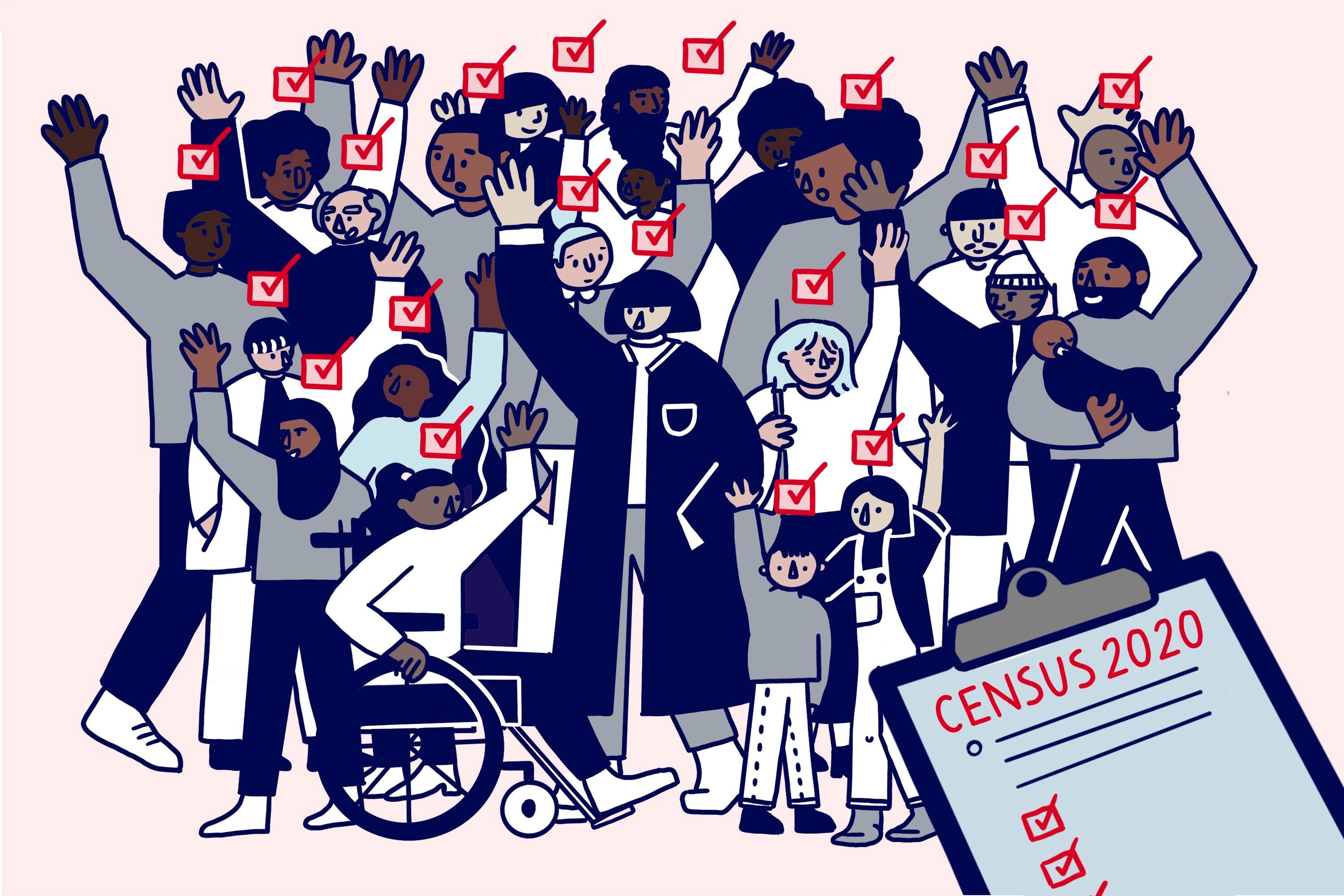
Although many community leaders have proposed that language barriers pose significant obstacles to Census outreach, this paper explores the viability of using predictive models to quantify the extent the role language plays.


Undercounts in the Census are notoriously difficult to measure, but are necessary to understanding the extent of systemic divides within America. Although many community leaders have proposed that language barriers pose significant obstacles to Census outreach, this paper explores the viability of using predictive models to quantify the extent the role language plays. By using a multivariable regression model trained on student data from the Civil Rights Data Collection, we concluded that Limited English Proficient (LEP) Asian populations were undercounted by over 98,000 people, LEP Native Hawaiian/Pacific Islander populations were undercounted by over 73,000 people, and LEP White populations were undercounted by over 164,000 people. However, biases in the dataset made the results for other ethnic groups unreliable, indicating that regression modeling should be used as a tool for identifying areas of improvement in the Census rather than producing an exact estimate of the population. Our data suggests a strong correlation between language proficiency and Census undercounts, and the Census Bureau could ideally use the results to create targeted language outreach programs for specific states.

Explore More!

Source Code
Tarun S.
Katie O'Nell
PhD Student at Dartmouth, Brain and Cognitive Sciences BS from MIT, Ethics+Social Sciences project and course developer at Inspirit AI

Related Projects

Applying Machine Learning to Historical Cyber Attack Data to Predict and Prevent Future Attacks

This research demonstrates that machine learning algorithms can leverage historical data to predict the nature and severity of future cyber attacks with reasonable accuracy, revealing that despite the sophistication of state-sponsored actors, their attack patterns often exhibit digital fingerprints that offer valuable clues for anticipating future threats amidst global geopolitical tensions.
Isabella F.
Mentored by Simeon Sayer
DeepSolar Bangladesh: A Novel Convolutional Neural Network (CNN) Architecture for the Detection of Solar Panels from Low Resolution Satellite Imagery in Developing Countries

Due to its environmental benefits and decreasing costs, the supply of solar energy is growing at an accelerating pace globally. However, the decentralised nature of solar makes it difficult to keep track of the different photovoltaic (PV) systems deployed across a country. There is a critical need for highly accurate, comprehensive national databases of solar systems, which would allow policymakers, researchers, and the government to study socioeconomic trends in solar deployment. Manual surveys have shown to be inaccurate. The 2018 DeepSolar study by Yang et. al developed a deep-learning framework and national solar deployment database for the US using high-quality satellite imagery, which proved to be a much more efficient and accurate approach. However, satellite imagery in developing countries such as Bangladesh is of much lower resolution and quality, and performed poorly with the original DeepSolar model by Yang et. al. Our study highlights the implementation of a novel convolutional neural network (CNN) in detecting solar panels through low resolution Google Static Maps API satellite imagery data.
Khondoker F.
Mentored by Barbie Duckworth
What Factors Correlate with the Relationship Between Gender and Race and Pursuing STEM?

In this paper, I sought to answer the question, “How do races and genders differ in the way they pursue STEM, and what factors correlate with these differences?” Identifying which factors cause this lack of representation is the most important step in fixing the diversity problem.
Saket R.
Mentored by Bradley Yam