An Investigation Into Applications of Machine Learning Algorithms on Solar Flare Data and Distance Prediction
The current method that NASA uses for flare prediction involves studying various solar cycles that range from 11 days to 80 years. However, there are far too many factors to consider using this method of prediction and the forecasts are often wrong.
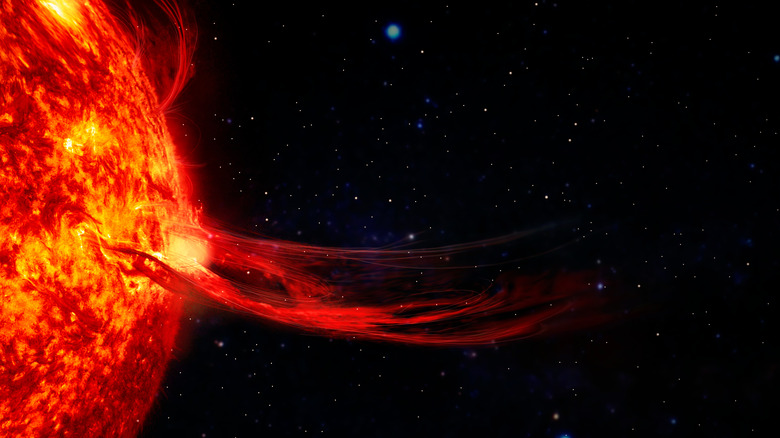
A solar flare is an intense localised eruption of electromagnetic radiation in the sun’s atmosphere. A solar flare is typically accompanied with a coronal mass ejection (CME), in which a highly magnetic plasma is released from the sun’s corona into the heliosphere. CMEs are capable of reaching earth and colliding with the earth’s magnetic field, causing dangerous geomagnetic storms that can start fires and cause power outages. It is imperative that flares are studied so that actions can be taken to mitigate the effect of geomagnetic storms. Our data was sourced from the RHESSI telescope which consisted of almost 100,000 entries. It was shown in Fletcher’s paper that there exists a correlation between radial distance and the energy of a flare. We began with classifying solar flares based on their radial distances and then applying machine learning models like logistic regression, KNN classification, Decision Trees and MLP Classification and closely examining the ones that gave the highest accuracy. Our different machine learning models showed that there existed a pattern in the phenomena of solar flares and our AI could be used to predict them accurately. Most notably, the decision tree model had an accuracy of 99.84%.
Explore More!
Related Projects

© 2022 Inspirit AI. All Rights Reserved.