Back To Projects

Classifying Non-Gaussian Transient Noise in LIGO

Maanya M.

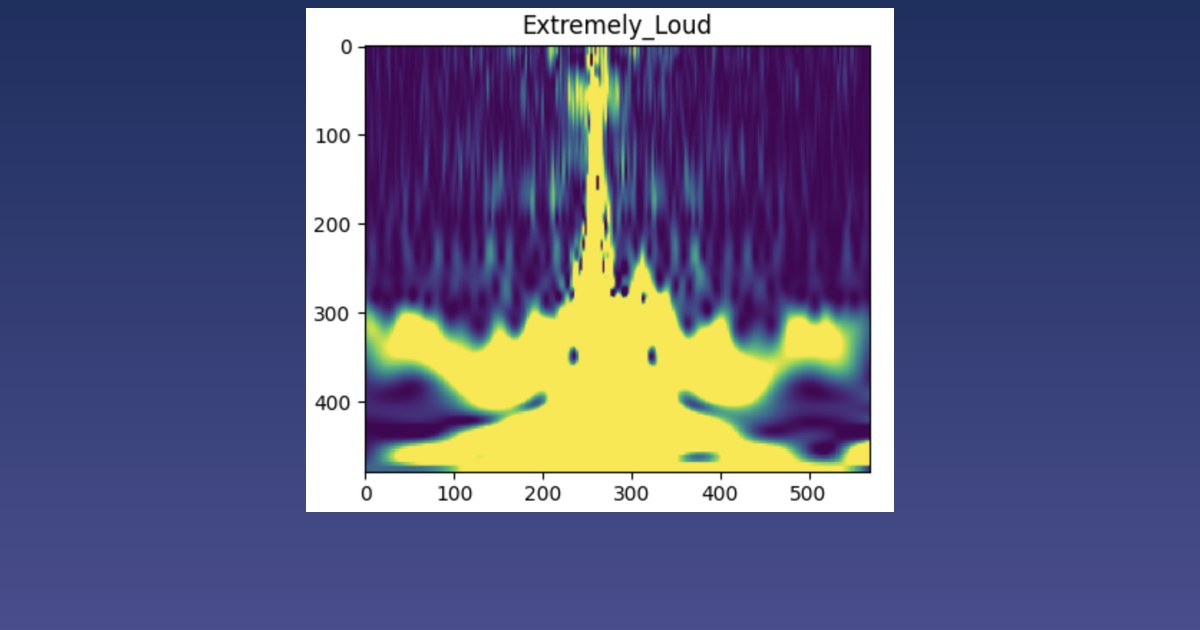
Using computer vision to analyse gravitational waves can provide valuable information about previously obscured information.


Space exploration methods have never been as diverse and thorough as it is in today’s time. New techniques that span far beyond the conventional method of using electromagnetic radiation to identify and study astronomical evidence have been discovered and are now amplified using machine learning technology. One such technique is using interferometers to record gravitational waves released from astronomical events. Using computer vision to analyse gravitational waves can provide valuable information about previously obscured information. Also, gravitational waves are fundamentally unrelated to electromagnetic radiation thereby providing us with information that is entirely different from what we previously could access. This has consequentially opened an altogether new avenue for research and further exploration. The contrastive model for machine learning-based detection and classification performed the best.

Explore More!

Maanya M.
Anthony Cuturrufo
PhD Candidate in Computer Science at UCLA, Cornell CS Alum

Related Projects

workspace_premium
Stellar Classification based on Numerous Characteristics using Machine Learning

The task of stellar classification can be tedious and lengthy when done manually. One can expedite stellar classification by creating an artificial intelligence model to automate the process. The current stellar classification model serves to effectively categorize stars for research purposes regarding their distribution around the universe, so automating the development of this resource would allow professionals to allocate more time to explore the bounds of our current understanding of space and the universe. After finding and analyzing a dataset containing numerical and categorical features, a supervised learning approach was then used to train and test different models on their ability to classify the stars in the given test set. A Decision Tree Classifier, Random Forest Classifier, Ridge Classifier, and Support Vector Classifier were trained and tested using the data.
Roberto T.
Mentored by Sophia Barton
Using Machine Learning to Classify Stars, Quasars, and Galaxies

In this project, we looked at data from stars, quasars, and galaxies from the sixteenth data release of the Sloan Digital Sky Survey Telescope. The aim of the project was to accurately and quickly classify these three types of objects using machine learning. We used three machine learning algorithms, namely logistic regression, multi-layer perceptron, and decision tree classifier.
Chinmay R.
Mentored by Amanda Wang
Vibration Analysis

This paper covers differences in accuracies of an artificial intelligence model that classifies different sets of sensor outputs (in this case, machinery shaft vibrations) collected by sensors into varying levels of weight on the shaft.
Akshay N.
Mentored by