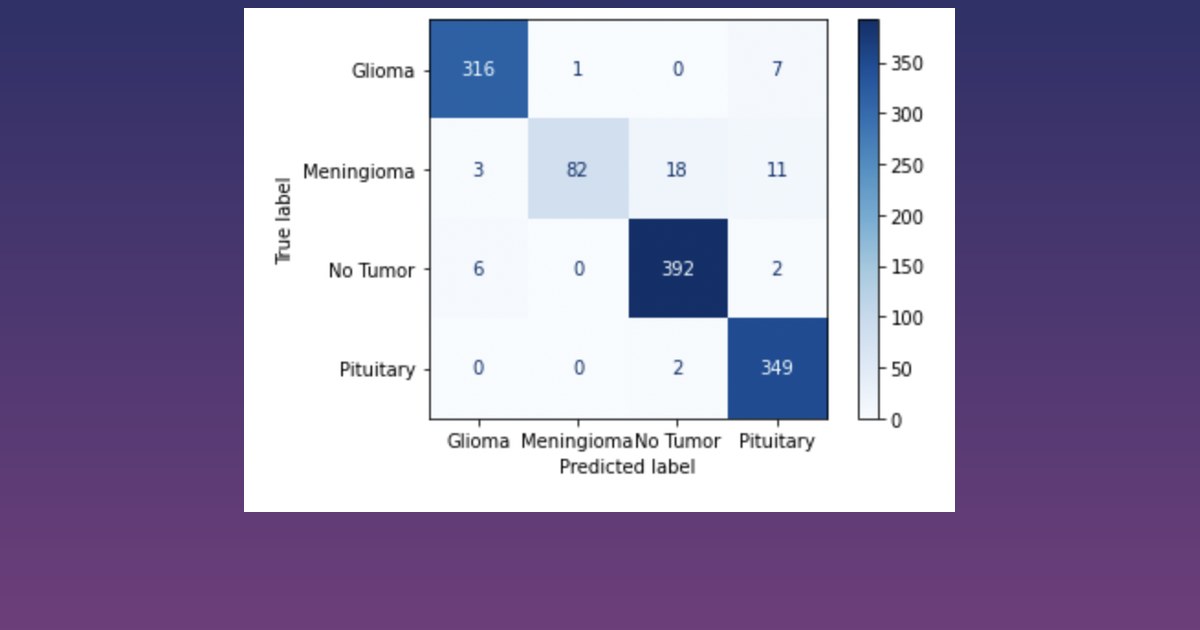
Current methods for determining the presence and type of brain tumor in a given patient’s MRI scan can oftentimes be inefficient and are prone for error. By using a machine learning algorithm, the error in these classifications is reduced significantly, and the process is made much more efficient.
Through the rapid destruction of brain cells, malignant brain tumors can be one of the most dangerous forms of cancer that exist. Current methods for determining the presence and type of brain tumor in a given patient’s MRI scan can oftentimes be inefficient and are prone for error. By using a machine learning algorithm, the error in these classifications is reduced significantly, and the process is made much more efficient. To approach this problem, we have implemented an Inception Resnet, which is a pretrained Convolutional Neural Network. The final model is able to determine the presence of a possible brain tumor as well as distinguish the type between three different classes. These classes include pituitary, meningioma, and glioma. Pituitary tumors are the most harmless of the three as they are noncancerous. The five year survival rate for a patient with a pituitary tumor is 97%. This contrasts greatly with both glioma and high grade meningioma tumors which are life-threatening [2]. It should be noted, however, that high grade meningioma tumors are very rare. Along with these three classes, a separate control class with no brain tumors was also used. After training the model on these four classes, the results were found to be impressive, as the final accuracy was at 96.7%.
Explore More!
Related Projects


© 2022 Inspirit AI. All Rights Reserved.