Back To Projects

Gamma Ray Classification

Eesha S.

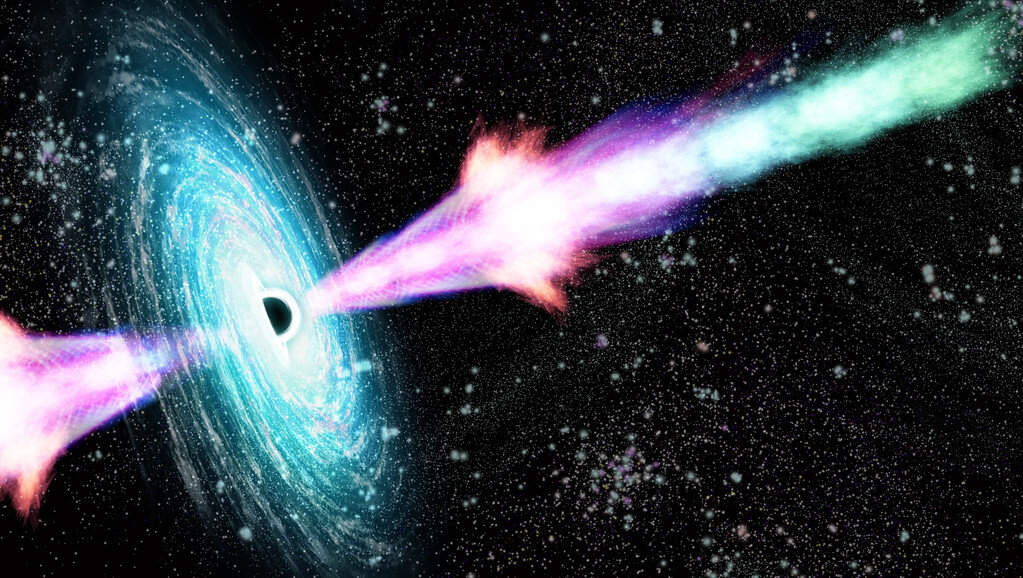
This research paper is in this domain of physics, specifically using Artificial intelligence (AI) to classify high-energy Gamma particles as background or signal. I was able to create an AI model to classify these gamma particles with high accuracy. I was able to accomplish this by using a wide range of data, from the MAGIC Gamma Telescope Dataset, which consists of key features, to construct a model.


The focus of this research project is to be able to classify high-energy gamma particles as signal or background. It is important to solve this issue, as it allows us to explore phenomenas that we are unable to see on Earth. High energy gamma particles are also a major part of particle physics. Research in particle physics has helped us in the world of medicine, in drug development, along with exploring more about matter that makes up our world. I created a model that classifies a particle as signal or background based on given test features that I was able to get from the NASA MAGIC Gamma Telescope experiment. This was accomplished by creating an ML model and following the process of training, predicting, and evaluating to test various models. I found the accuracy score of the model, created a confusion matrix, and calculated the f1 score for all the models. For the final model, I got an accuracy score of 88.44% and an f1 score of about 0.883, allowing me to finally find a model that classifies the high energy gamma particles with the highest accuracy.

Explore More!

Eesha S.
Victoria Lloyd
PhD Student in Physics, Prior Research Collaborator at Caltech,

Related Projects

Predictive Dynamics of Solar Cycles: An Analysis of Sunspot Patterns, Granger Causal Relationships, and Terrestrial and Space Weather Phenomena

This paper attempts to understand the complex nature of solar cycles, primarily through the lens of sunspot data analysis, to predict future solar activity and explore its causality with Earth and Space phenomena such as global temperatures and CO2 Emissions.
Mariah D.
Mentored by
workspace_premium
The Use of Artificial Intelligence in Gravitational Microlensing Detection for Dark Matter Discoveries

This research utilizes Artificial Intelligence to enhance the speed and accuracy of microlensing detection using data from 600,000 stars observed by The Zwicky Transient Facility. Through comparative analysis and hyperparameter tuning, the KNN model was identified as the most accurate, achieving 97% accuracy in detecting microlensing events, which may include dark matter, within the Milky Way.
Suhaan K.
Mentored by Tony Rodriguez
Fast and Accurate Gamma-Ray/Hadronic Particle Shower Classification Using Machine Learning

This research applies dimensionality reduction techniques, such as Pearson Correlation and Principal Component Analysis, to machine learning models like Random Forests and Support Vector Classifiers to simplify the prediction of atmospheric gamma-ray particle showers, achieving a modest accuracy increase while reducing the number of features used.
Leonardo V.
Mentored by Pablo Bonilla