
Investigating Data Augmentation Strategies for Computer Vision Facial Expression Recognition
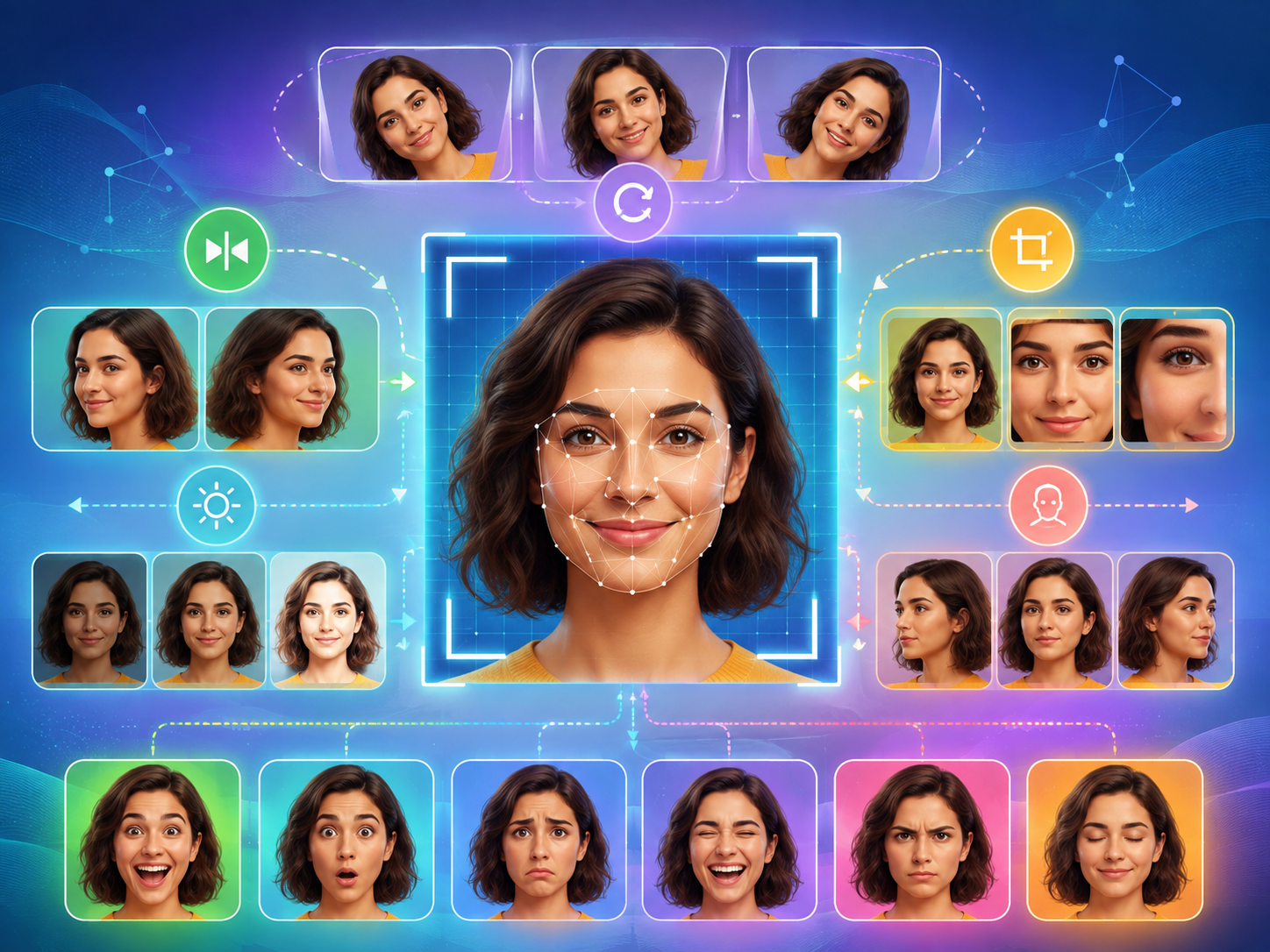
I aim to help people with autism better recognize emotions by developing improved artificial intelligence (AI) models to recognize facial expressions.
Autism is a neurodevelopmental disorder. A major symptom is difficulty communicating and understanding social cues such as emotions. I aim to help people with autism better recognize emotions by developing improved artificial intelligence (AI) models to recognize facial expressions. Such models can be and have been integrated into digital therapeutics for children with autism. A crucial step to achieving performant models is to apply data augmentation to increase the dataset size and the generalization capacity. I compare and contrast data augmentation strategies on the Facial Expression Recognition (FER) 2013 dataset to determine which method leads to a maximal increase in performance. I then examine the benefit of data augmentation at various training set sizes. Among the strategies I evaluate, I find that shifting the width of the image provides the greatest increase to performance when compared to not applying data augmentation. Furthermore, I find that at several training dataset sizes ranging from 100 to 20,000 images, applying all data augmentation strategies consistently outperforms no data augmentation. These strategies can inform the development of digital therapies for autism which focus on the evocation and subsequent automatic detection of facial expressions.
Explore More!

Related Projects

© 2022 Inspirit AI. All Rights Reserved.