
Back To Projects

Combating Climate Fake News Using NLP
Rayyan M. |
workspace_premium Santa Clara ISEF Qualifier

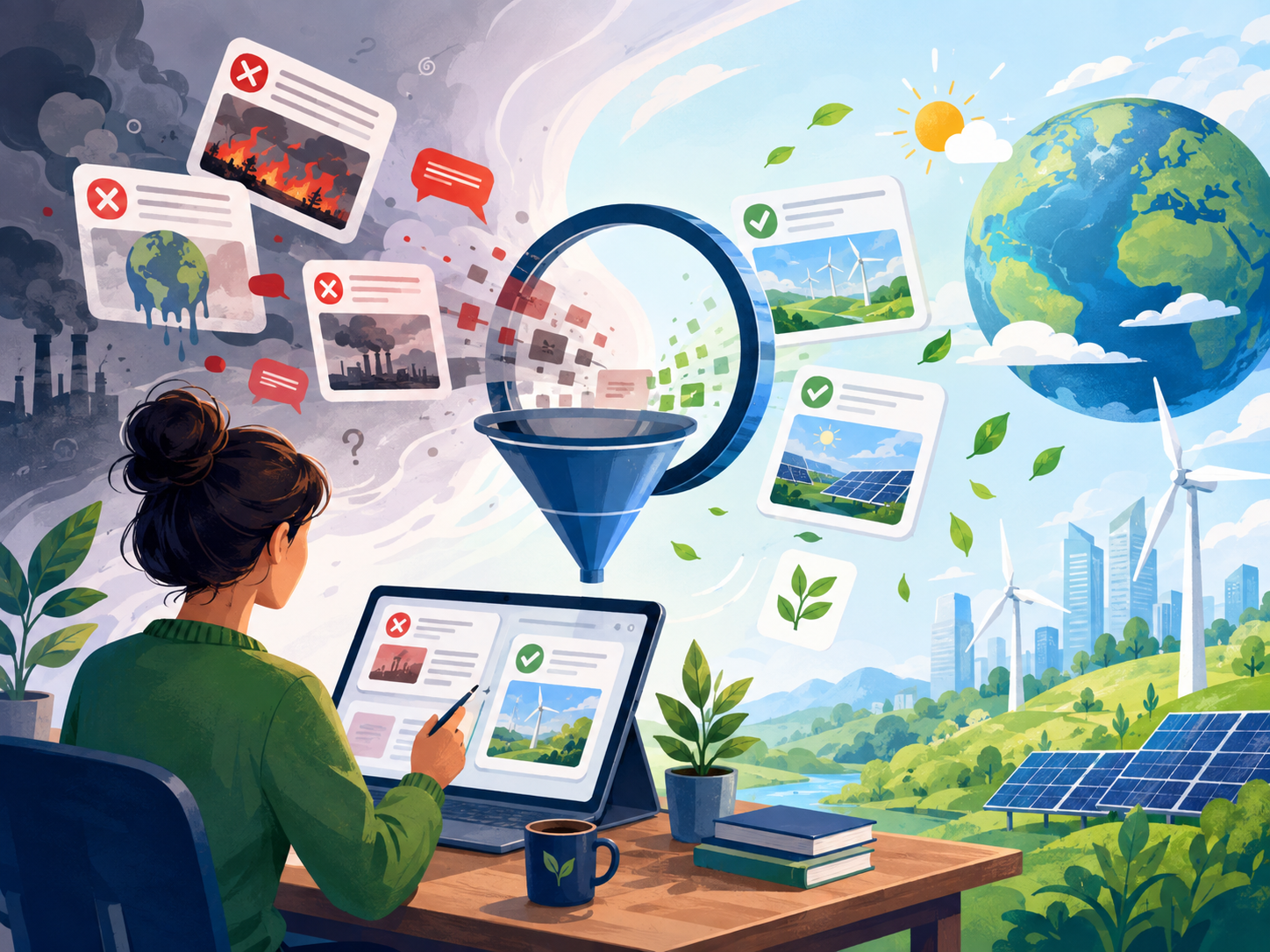
As fake news becomes more prevalent across the US, important issues become harder to solve. One such issue is climate change, where climate misinformation has worsened viewer’s abilities to distinguish between fake information and real information. This project’s objective is to tackle climate misinformation using an artificial intelligence model.


As fake news becomes more prevalent across the US, important issues become harder to solve. One such issue is climate change, where climate misinformation has worsened viewer’s abilities to distinguish between fake information and real information. This project’s objective is to tackle climate misinformation using an artificial intelligence model. The model utilizes a BERT model tested on the “climate_fever” dataset to classify whether climate-related claims are true based on pieces of evidence.

Explore More!

Source Code
Project Webpage
Rayyan M.
Philip Bell
Computer Science MS from Georgia Tech, Harvard and Oxford alum, AI Engineer at Cognino

Related Projects

Predicting Precipitation and Other Weather Conditions With Logistic Regression and Random Forest Classifiers

An issue we have with our current algorithms is the inability to predict weather accurately for any time range further than ten days. Our intentions with this project were to create a model that could get an accuracy within 5% of our current weather prediction algorithms.
Vadim Y.
Mentored by Darnell Granberry
workspace_premium
Predicting Climate Change Using an Autoregressive Long Short-Term Memory Model

This study aims to create a baseline machine learning model that utilizes an Autoregressive Recurrent Neural network with a Long Short term memory implementation for the purpose of predicting climate.
Seokhyun C.
Mentored by Victoria Lloyd
Identifying Parameters in Water Potability Analysis Through Machine Learning

Predicting whether the water is potable or not can be helpful for people who are reliant on bodies of water and redirect them to safer options. It will also be beneficial to apply the algorithm to other places where it is expensive and inefficient to send people out and collect water samples. Over the past couple of decades, researchers have often commented on the lack of funding as a source of error when it comes to data analysis and the accuracy of the research.
Molly H.
Mentored by Sharon Chen