
Understanding Object Detection’s Role in Decision-Making for Self-Driving Vehicles
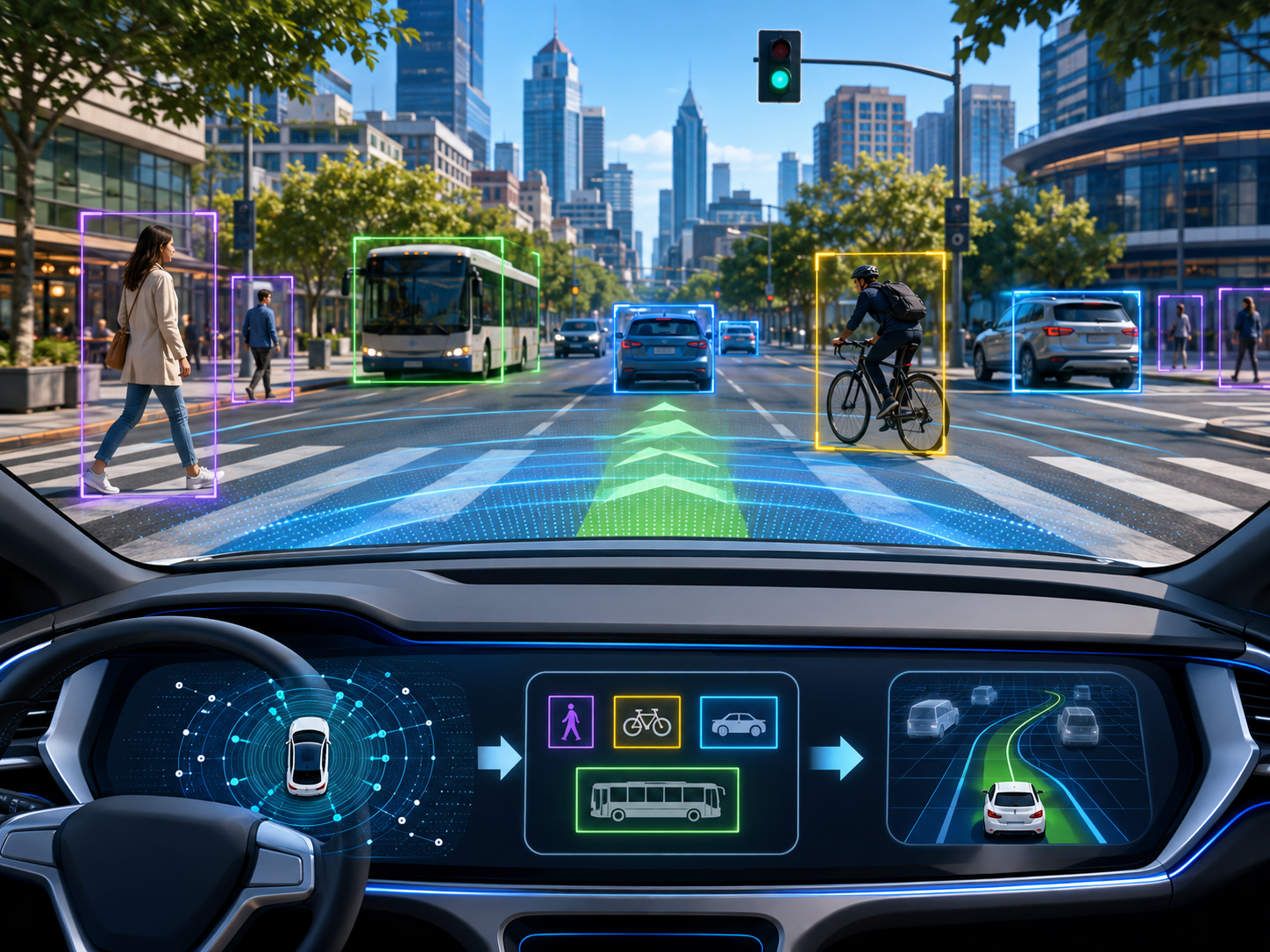
This research focuses on computer vision for self-driving vehicles by evaluating various AI models for object detection, finding that VGG16 outperformed others with precision of 0.7209 and recall of 0.7298, highlighting the importance of model selection and optimization in ensuring safe navigation in autonomous driving systems.
Our research aimed to understand computer vision in self-driving vehicles through object detection. We evaluated different AI models to determine the best performer for this task. Self-driving cars, led by companies like Tesla, rely heavily on advanced software, and understanding these systems is crucial before their widespread adoption. We applied machine learning models to detect vehicles in highway surveillance footage, comparing their precision and recall. Among the models tested, VGG16 outperformed others, achieving a precision of 0.7209 and a recall of 0.7298. Object detection in self-driving cars identifies vehicles and other road objects, ensuring safe navigation. Achieving high precision and recall requires large datasets with tens of thousands of images and thorough hyperparameter tuning. Choosing the right model is critical; in our case, VGG16 proved the most effective. These findings underscore the importance of robust model selection and optimization in advanced self-driving technology.
Explore More!
Related Projects

© 2022 Inspirit AI. All Rights Reserved.