Back To Projects

A Hybrid CNN-LSTM Model For Predicting Solar Cycle 25


The goal of this study is to predict Solar Cycle 25 through the deep learning approach,and determine what parameters affect prediction accuracy and what the optimal number of historical solar cycles are used to reliably and accurately predict the upcoming solar cycle. The solar cycle predictions will help us prepare ahead of time for future solar activity.


The solar cycle is linked to the number of visible sunspots and follows the fluctuations of the Sun’s magnetic field. It can have powerful global impacts on the Earth. Thus, predicting the timing and amplitude of the peak of the incoming solar cycle 25 is of great importance. This study uses a hybrid deep learning CNN-LSTM model and observed 13-month smoothed sunspot numbers to predict Solar Cycle 25. The MinMax normalization substantially reduces the error of the CNN-LSTM model’s solar cycle predictions compared to the Standard Deviation normalization. The results suggest that it is best to use four historical solar cycles to predict the future solar cycle. The predicted Solar Cycle 25 will have a peak amplitude similar to the 13-month smoothed peak of solar cycle 24. The predicted solar cycle 25 peak spans a relatively long period of time between approximately August 2023 and July 2024.


Alice H.
Tony Rodriguez
PhD Candidate in Astrophysics at Caltech

Related Projects

workspace_premium
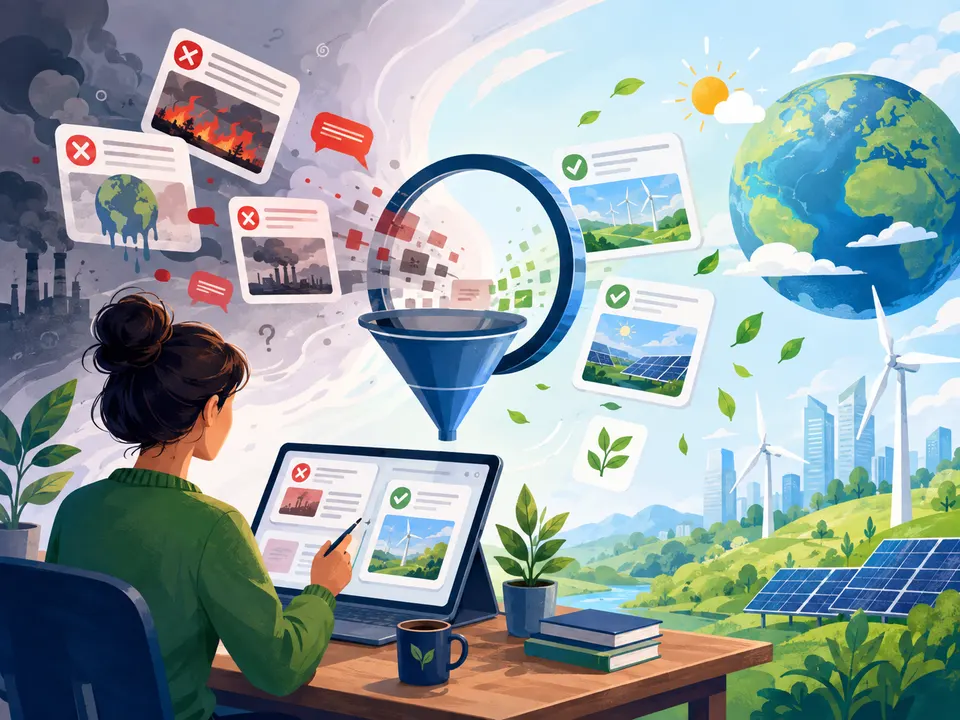
Combating Climate Fake News Using NLP

As fake news becomes more prevalent across the US, important issues become harder to solve. One such issue is climate change, where climate misinformation has worsened viewer’s abilities to distinguish between fake information and real information. This project’s objective is to tackle climate misinformation using an artificial intelligence model.
Rayyan M.
Mentored by Philip Bell
workspace_premium
Applications of AI in Microfinance

I hope to explore how to use AI in the field of microfinance to help reduce income inequality. Microfinance has greatly helped decrease rural poverty rates in Bangladesh. The leader of this effort won the Nobel Peace Prize for his work. These micro-loans give opportunity to those who are not otherwise able to obtain financing for their entrepreneurial ideas. This can be applied in the U.S. too, in places where the population cannot otherwise obtain loans to start small businesses and climb their way out of poverty. It can be very difficult to start from rock bottom in the US, especially for those without access to resources. If people could obtain small loans and start small businesses, they could work their way out of poverty. The microloans have to be viable for banks as well. The problem I’d like to explore is whether AI/ML can be used to determine how to deploy microloans efficiently to address income inequality in the U.S.
Alex M.
Mentored by Odysseas Drosis
workspace_premium
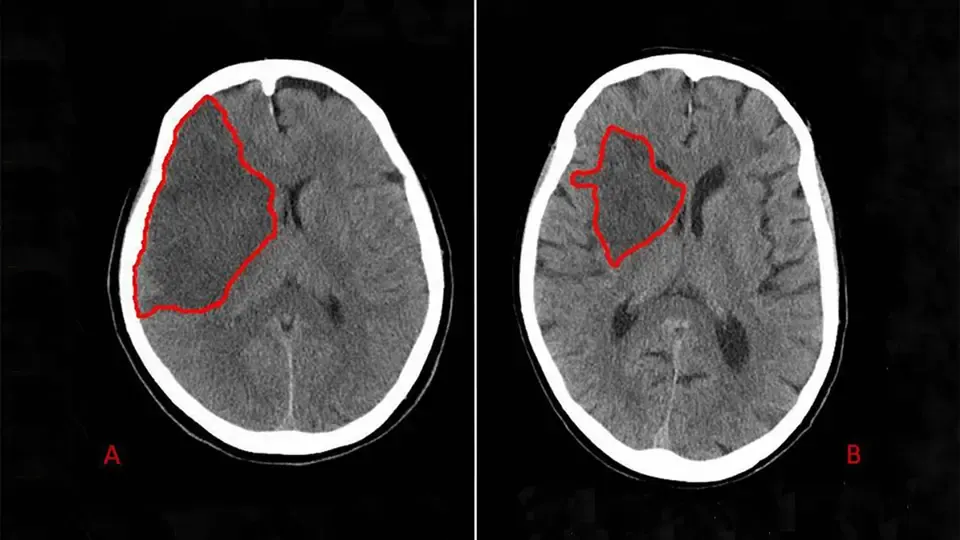
Diagnosing Brain Tumors from MRI Images Using Deep Transfer Learning

This study aims to utilize a transfer learning method in which the prior knowledge of a pretrained model is used to aid in a new classification problem.
Armita K.
Mentored by